Markets · Live Wire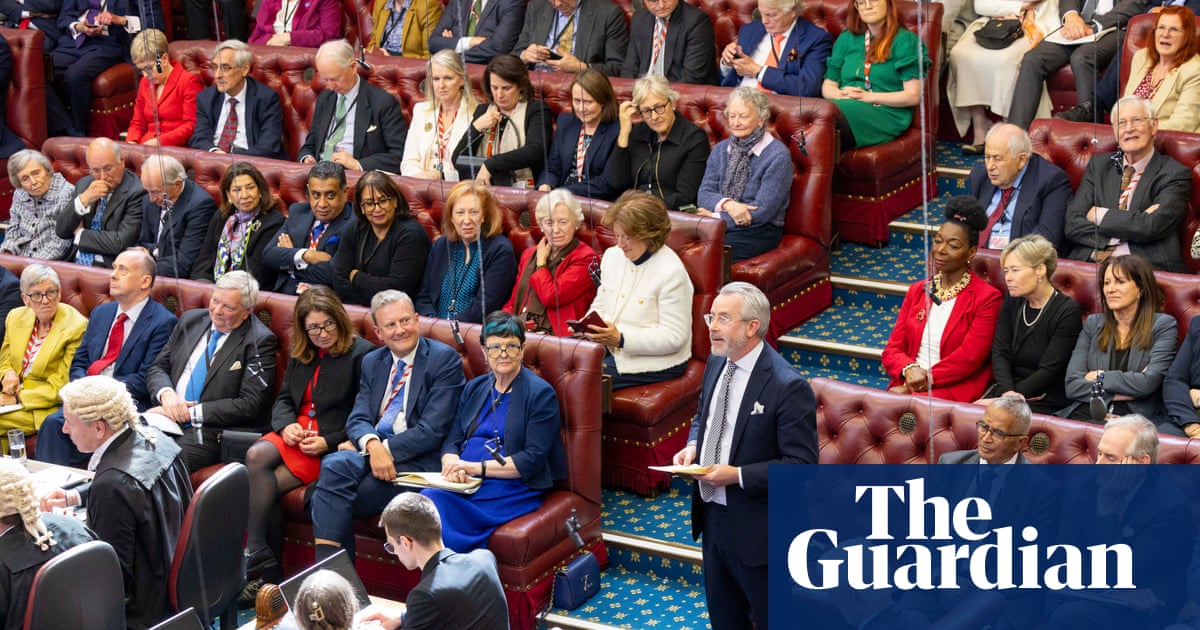
The House of Lords has long been derided as a stuffy relic of the past. But now its benches, usually filled with haughtily dressed men, could soon resemble something more akin to “dress-down Friday”. One of the nation’s most storied chambers of power has enacted a rule change: men are no longer required to wear a tie in the House of Lords.
Instead, they should opt for “business attire”. Ties have long been a knotty item of neckwear. For some, they are a nuisance: too tight and they are uncomfortable, too loose and they look a bit shabby.
For others, such as Stephen Fry, who professed his love for ties in a 256-page book , they can add a touch of undeniable class. Peter York, a writer and style commentator, is firmly on the traditional side of the debate, saying the dumbed-down dress code will “end in tears”. “Lords are not famous for being well-dressed at the best of times.
If they can go without ties, they can also wear plimsolls and stuff like that. They will look silly,” said York, who owns hundreds of ties. Guy Hills.
Photograph: Christian Sinibaldi/The Guardian He called them “little works of art”, and decried those who shunned them while dressing formally. “It looks as if you’re not completely dressed, or you’ve forgotten something,” he said. On Savile Row, views on ties were mixed.
“I don’t think ties are completely dead, they’re just having a down moment,” said Guy Hills, 58, a fashion photographer and owner of Dashing Tweed, who was sauntering down the street in a green tweed suit. Something else was also green: his moustache. He said his dyed facial hair might be allowed in the House of Lords, and is in support of the relaxed dress code, believing that members have a responsibility to keep up with fashion trends.
“They used to be the driving force of fashion, especially around Savile Row. They would go to their tailors and try to outdo each other. When you stop all that, and it becomes like a living museum, then the whole menswear fashion world stops,” he said.
Hills usually has something around his neck. “I can’t go out without a scarf because it looks too slovenly,” he said. But Thursday afternoon was, unluckily, one of the rare occasions he was without a silk scarf or cravat.
While ties aren’t totally “in”, Hills thinks they could make a comeback. “The younger generation is now getting more interested in sustainability and proper clothing. A tie really finishes a whole outfit off,” he said.
Chaand Singh. Photograph: Christian Sinibaldi/The Guardian Among the few wearing a tie on Savile Row was Chaand Singh. The 25-year-old, who works in marketing, had decided to wear a navy tie from Next because of an important work meeting.
“Dressing up and adding a tie elevates the look,” he said – so much so that he had received compliments from people. “Someone said that I look a bit more sharp today.” Ties were no longer an office must, said Singh – but he thinks they still have their place. “I’ve got some from the 80s with cool patterns.
They’re usually wider and designed when fashion was a bit more experimental,” he said. “I would wear them at work for the right scenario, but casually as well. Some girls even wear ties as belts.” James Sleater.
Photograph: Christian Sinibaldi/The Guardian What do tailors on the Row think? “The House of Lords should be a mirror of society. What better way of doing it than reflecting current trends?” said James Sleater, 45, the owner of Norton & Sons.
“Women don’t have to wear ties, and if men have the option, it’s OK by me.” Sleater said that in the “post-Covid era, there has been a huge decline in neckwear and the number of people wearing ties to the office”, adding that the “relaxation of dress codes is symptomatic of people working several days a week at home”. Norton & Sons sees people from all walks of life. “Yesterday we had an ex-prime minister and today we’ve got a Hollywood star having a fitting.
We also see people wanting a suit for their first job and people celebrating a wedding,” he says. Have these customers shunned ties and other neckwear in droves? Actually, no.
“We’re seeing the reversal of this trend,” says Sleater. “We’re selling more neckwear this year than we did in previous years. “If you’re no longer forced to do something, it almost becomes a pleasure to it,” he adds.
“To wear a suit to work when you don’t have to is a joy. When you’re told to do it, you’re almost feeling rebellious and you don’t want to do it.” People have opted for “more characterful textures rather than just plain silks or bright brash colours”, though Slater sees a limit to a potential neckwear revival. “I don’t see cravats or bow ties coming back,” he said.
As for Lords who can keep their ties at home, some are in favour of the new rules. “In truth, the only people now wearing ties for business purposes are estate agents and funeral directors,” Lord Davies of Brixton, a Labour peer, told the Telegraph. “The tie is disappearing.” It remains to be seen if Davies’ fellow Lords will heed the message.
Source: The Guardian