Markets · Live Wire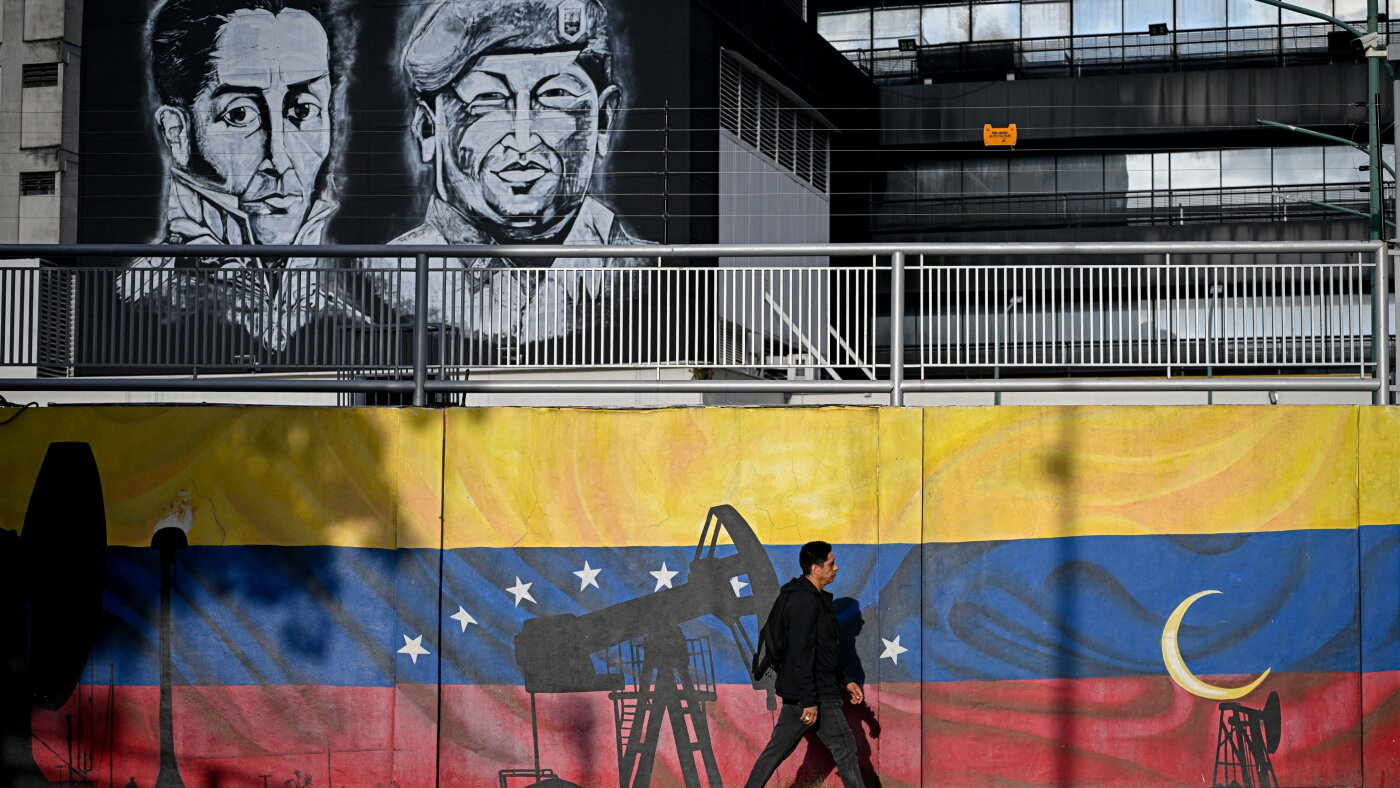
Transcript ANNOUNCER: This is Planet Money from NPR. NICK FOUNTAIN: It's been one week since President Trump got on Truth Social and announced that the United States of America had just entered into an agreement with Venezuela on the Biggest Oil Deal in World History. ERIKA BERAS: This announcement was vague on details, but more have come out since. According to the White House, the US government, through the Pentagon, might be buying a stake in a Venezuelan oil company. The Venezuelan government is giving that company the exclusive right for 100 years to extract oil from 17 of its oil fields. The US will get a significant portion of that oil at a discounted rate.
FOUNTAIN: So, eight months after Trump ordered the capture of Venezuela’s leader and told oil execs, ‘we’re going to be extracting numbers in terms of oil like few people have seen,’ the US government is now reportedly entering the oil business. Venezuela, despite having one of the world’s largest oil reserves, is a poor country with a struggling oil industry due to political instability and the paradox of plenty—an economy heavily reliant on a single resource.
BERAS: The focus today is on the role of foreigners in Venezuela’s oil industry. For a century, Venezuela has struggled with the ‘can’t live with them, can’t live without them’ paradox: opening its oil fields to foreign investment but then shutting them out again. JOSE ANGEL PEREIRA RUIMWYK, a third-generation Venezuelan oil expert, shares his insights on this cyclical pattern.
RUIMWYK: His grandparents worked in Venezuela’s oil industry at its founding, when foreigners dominated. His parents were part of its nationalization in the 1960s, sent to the US for petroleum engineering training. RUIMWYK: ‘Ten Venezuelan families in the ’60s in the US was very uncommon.’ FOUNTAIN: In the late 1970s, RUIMWYK and his family returned to Venezuela, where they worked for PDVSA, the state-run oil company. RUIMWYK: ‘We celebrated Thanksgiving, Halloween, and the Fourth of July—like a Texas oil town.’
BERAS: The 1990s ‘apertura’ (opening) to foreign investment brought new technology and jobs but also led to political turmoil. When Hugo Chávez gained power, he nationalized oil contracts, leading to a 2002 oil strike. RUIMWYK: ‘They fired 20,000 people, including many I knew.’ Chávez’s redistribution efforts backfired, and foreign investment dwindled.
FOUNTAIN: Today, RUIMWYK sees the new US-Venezuela deal as ‘apertura 2.0.’ He believes foreign investment could revive Venezuela’s oil sector but warns of past mistakes, such as favoring foreign interests over local workers. The deal includes a $100 billion investment by a private Venezuelan company, with Chevron committing $7 billion over five years.
BERAS: RUIMWYK emphasizes the need for sustained investment in infrastructure, jobs, and local support to ensure long-term benefits for Venezuelans. He stresses that while foreign expertise is crucial, the country must avoid past errors of prioritizing foreign profits over national welfare.
Source: NPR